
Kayaking / Bangladesh / River conservation
Expedition Teesta-Teknaf: 48 Days of Solo Kayaking Across Bangladesh
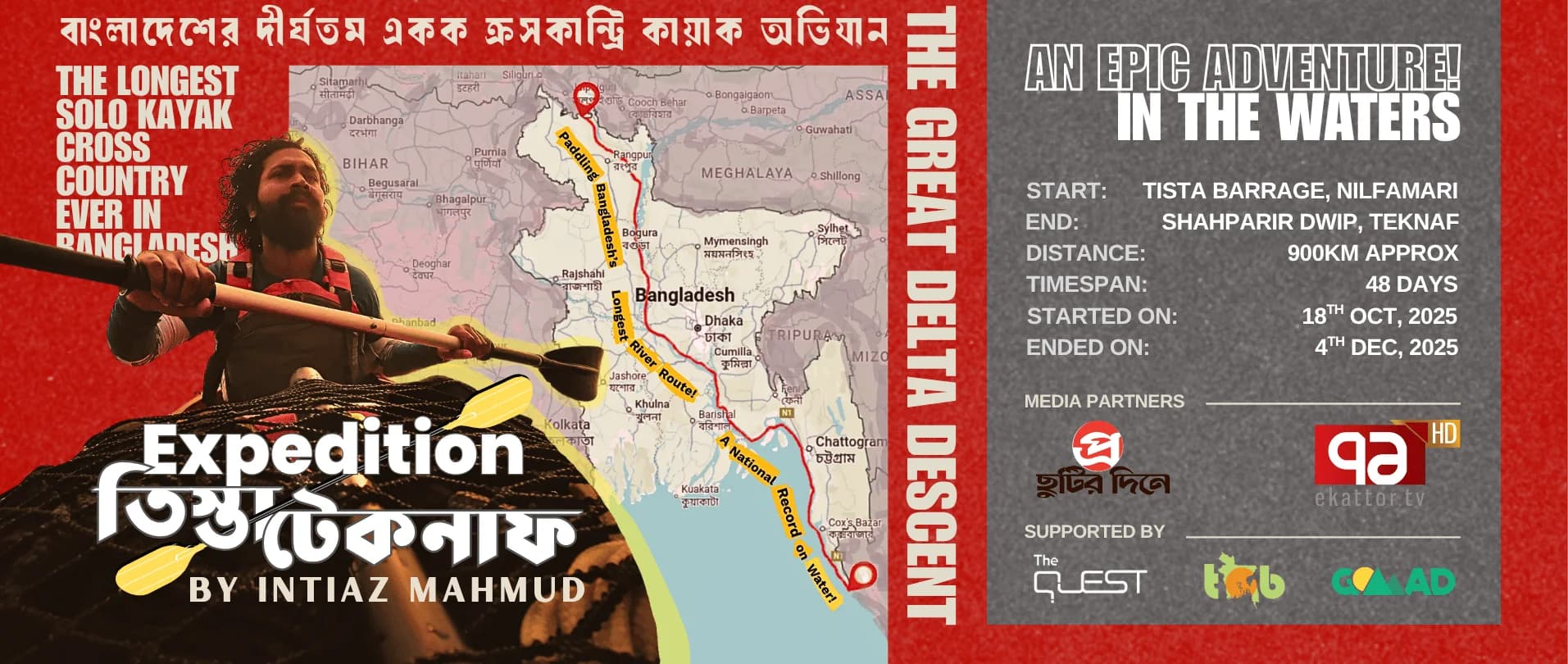
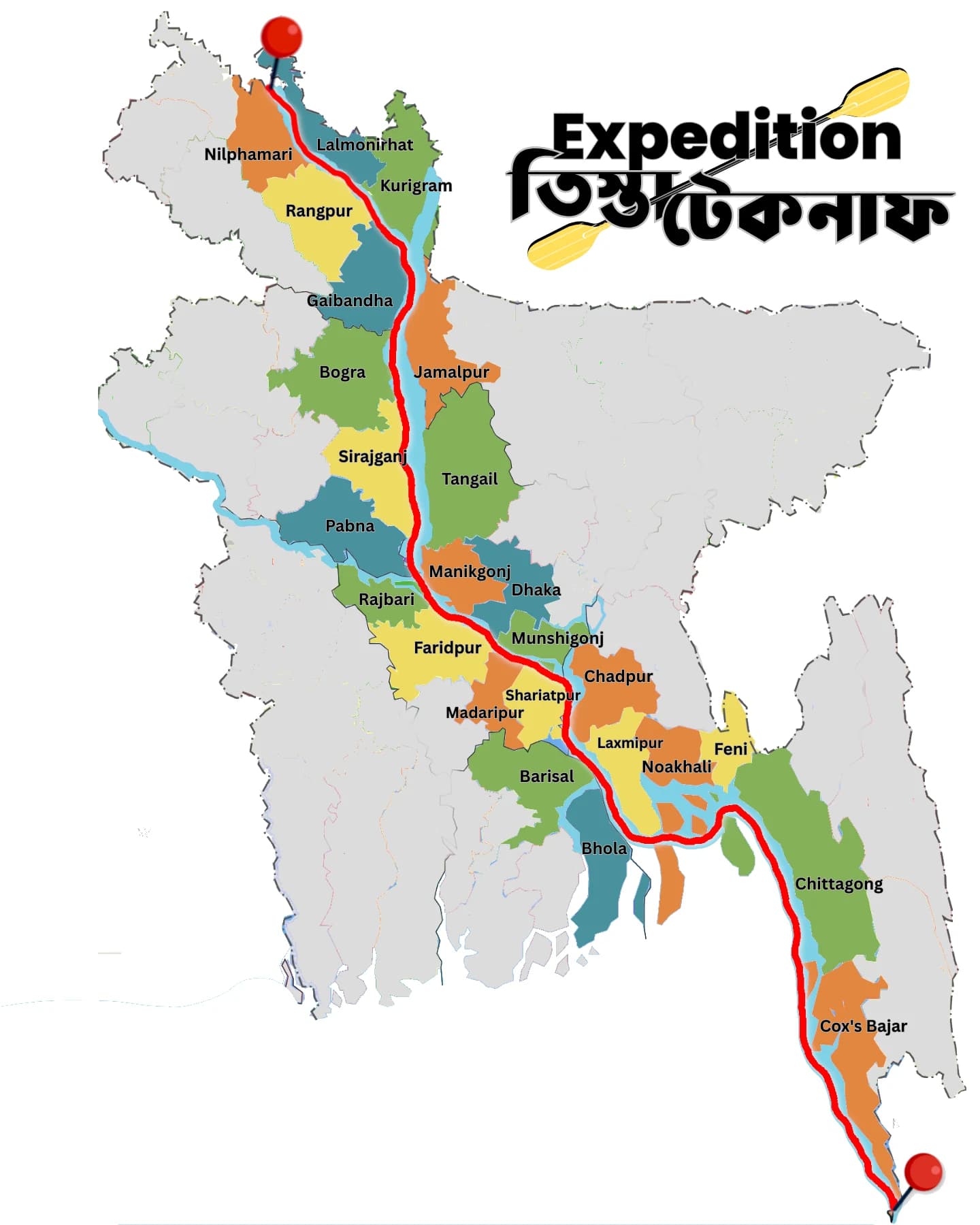
A 950+ km solo kayak expedition across Bangladesh, from the Teesta near the northern border to Shah Porir Dwip, Teknaf: 25 districts over a 48-day journey.
A country seen from the water
The sea first reached me through books. As a child, I travelled from the Atlantic to the Pacific in sailing stories, without ever leaving home. I grew up without becoming a sailor, but the urge to wander stayed.
Years later, on the Surma in Sylhet, that childhood fascination found a river. Moving with the water was different from crossing it on a bridge. There were quiet evenings, riverside homes and people whose days followed a rhythm I had barely noticed before.
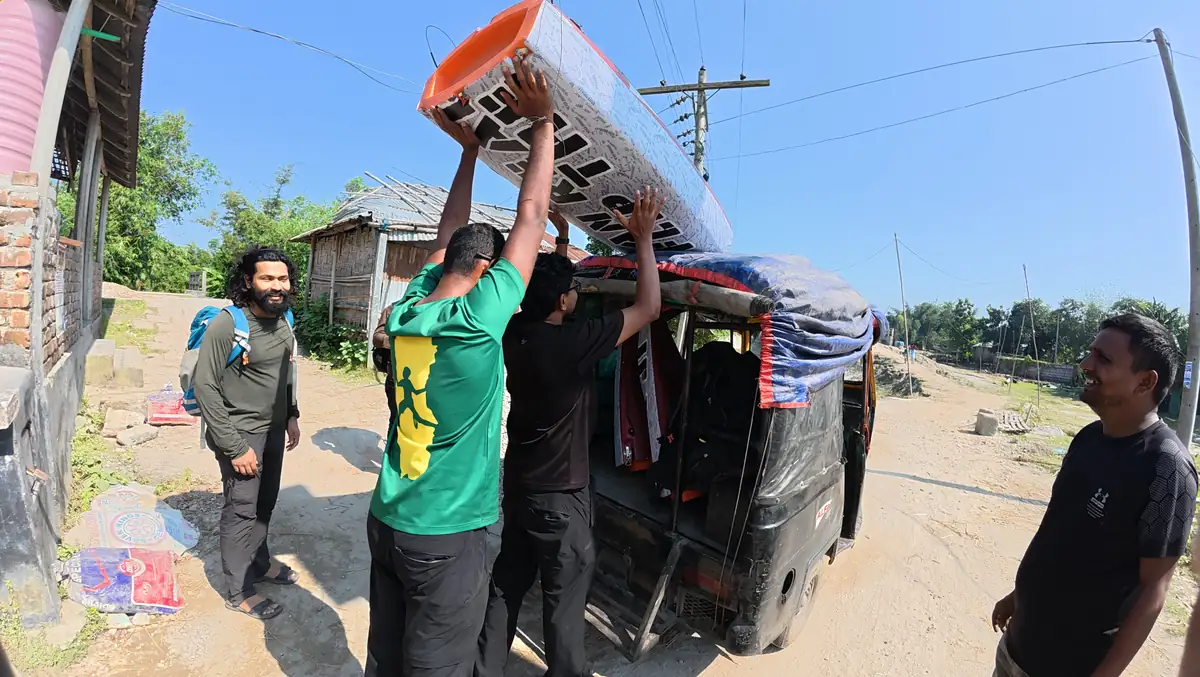
Back home, Munim Chowdhury and I decided to explore Bangladesh through its waterways. A kayak seemed right: no engine, no diesel fumes, just a paddle and the freedom to stop. Finding one was harder. Then Shihab Bhai, a kayaking instructor living in Finland, gave us the unused kayak at his family home in Savar. We brought it towards Sadarghat through the Dhaleshwari and began learning through smaller journeys.
A nine-day paddle from Rajshahi to Chandpur in June gave me the next idea: cross Bangladesh alone, from the Teesta near the northern border to Shah Porir Dwip in Teknaf.
The plan, and the river’s timetable
The route would connect the Teesta, Brahmaputra–Jamuna, Padma and Meghna, then continue through tidal estuaries and along the Bay of Bengal coast. I planned roughly 1,000 kilometres in 30 days. Preparation took longer than expected, and a cyclone delayed the start again.
On 18 October 2025, I launched near Dohol village in Dimla, Nilphamari, close to the India–Bangladesh border. On 4 December, I landed at Shah Porir Dwip. The completed expedition covered more than 950 kilometres across 25 districts in 48 days. The planned distance and the completed distance are different measures; the river also had little interest in my original schedule.
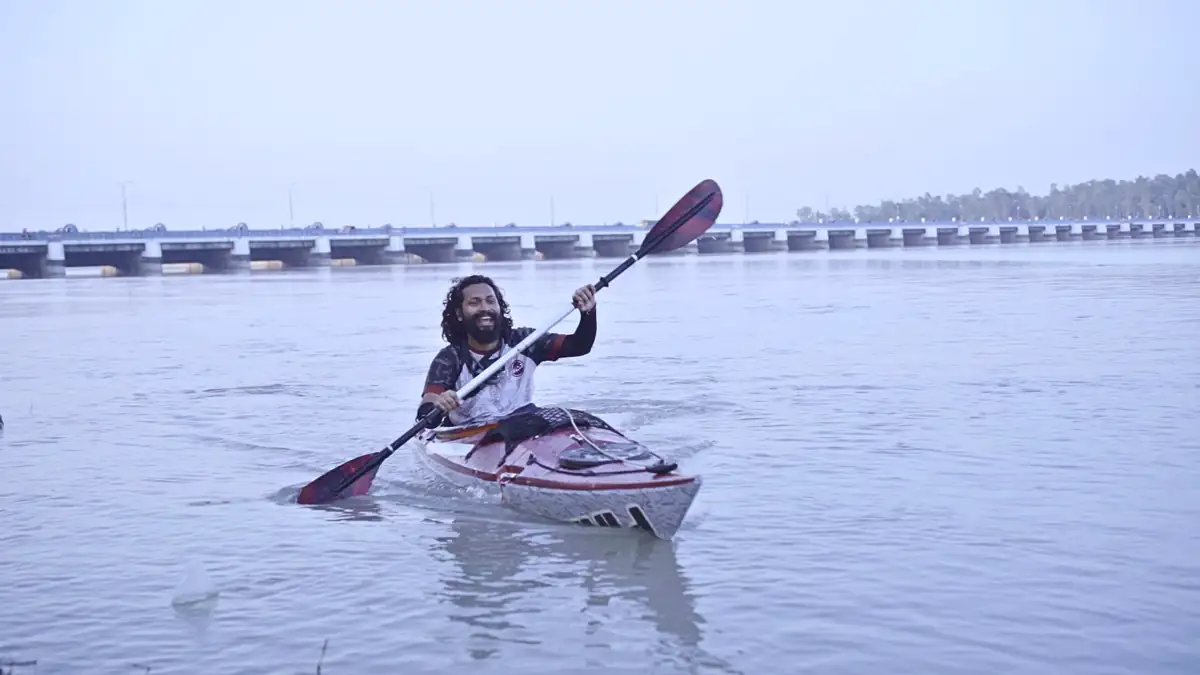
Teesta Barrage, pictured below, is about 10–12 kilometres downstream from where I began the expedition.
The shallow Teesta, and the generous north
The first river was almost empty. Across shallow stretches, I climbed out and dragged the kayak with a rope. The heat made those slow passages exhausting. From the Teesta I continued into the Brahmaputra and Jamuna, through the northern river districts and towards Pabna.
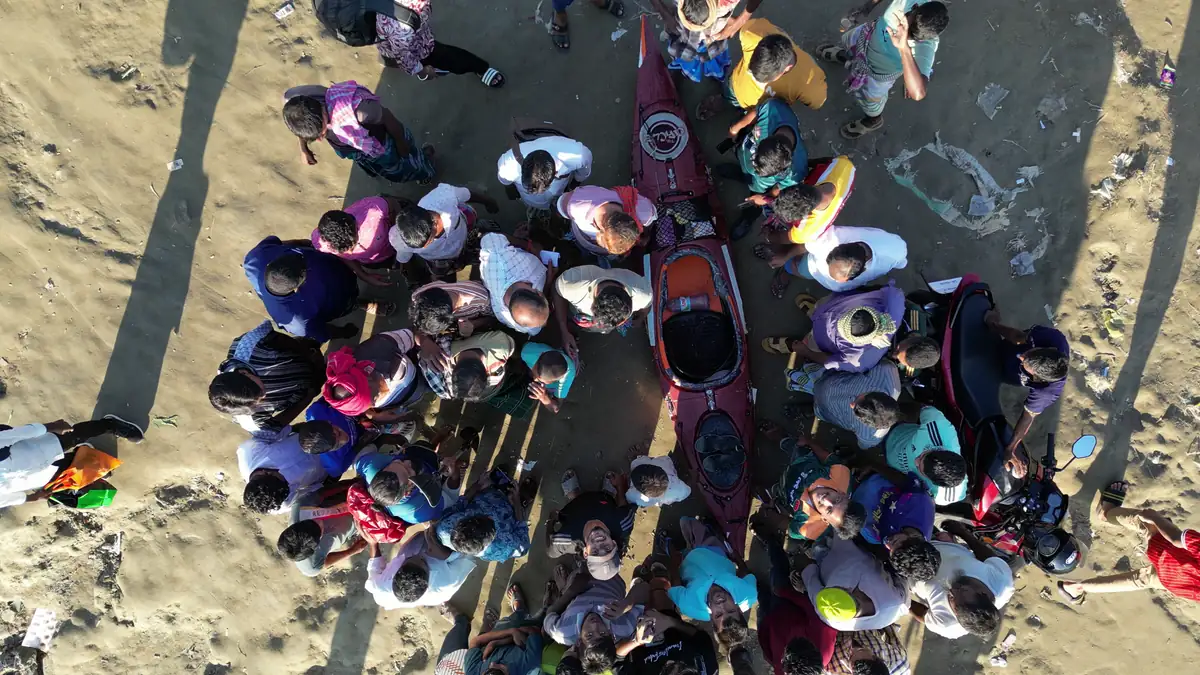
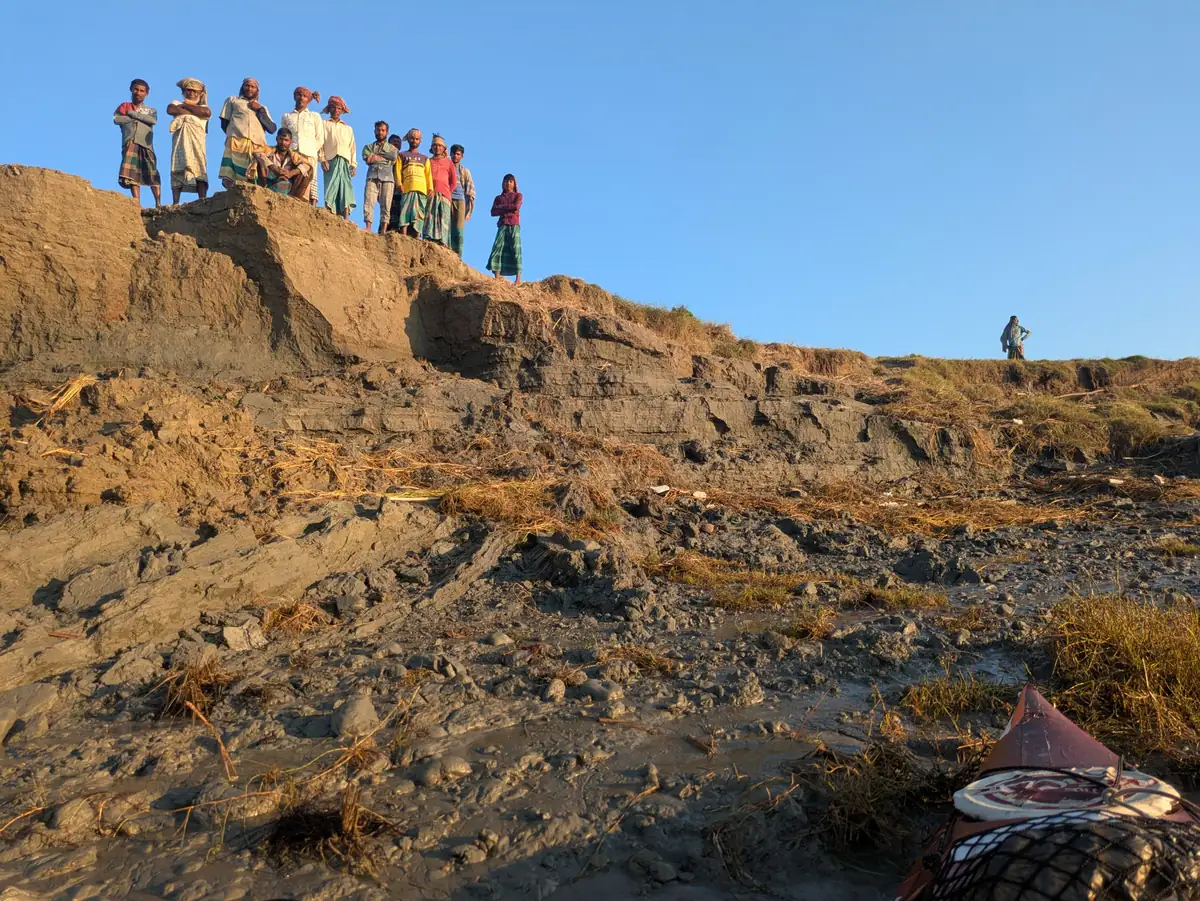
What I remember most is the welcome. In Bidyananda Union, Kurigram, I left the kayak at Chandan Da’s home. People gathered beside the river to sing while Boudi cooked. Later, at Asgar Ali Chacha’s house, another meal was waiting. The next morning brought khichuri, tea, roti and sugar for the road. A woman offered roasted peanuts and apologised that she had so little to give.
I had arrived as a traveller staying one night. Leaving felt much harder than that. Similar kindness followed me through Chapra-Saghata, Kazipur and the settlements along the Jamuna. Again and again, strangers made room for the journey in their own lives.
Where the tide took over
From Pabna, I entered the Padma, passed Paturia and Mawa, and continued towards the Meghna at Chandpur. Beyond that confluence, the terms of travel changed. The outgoing tide could carry me south; the incoming tide could undo hours of work. Shortening winter days and shifting tide times reduced the hours available for progress.
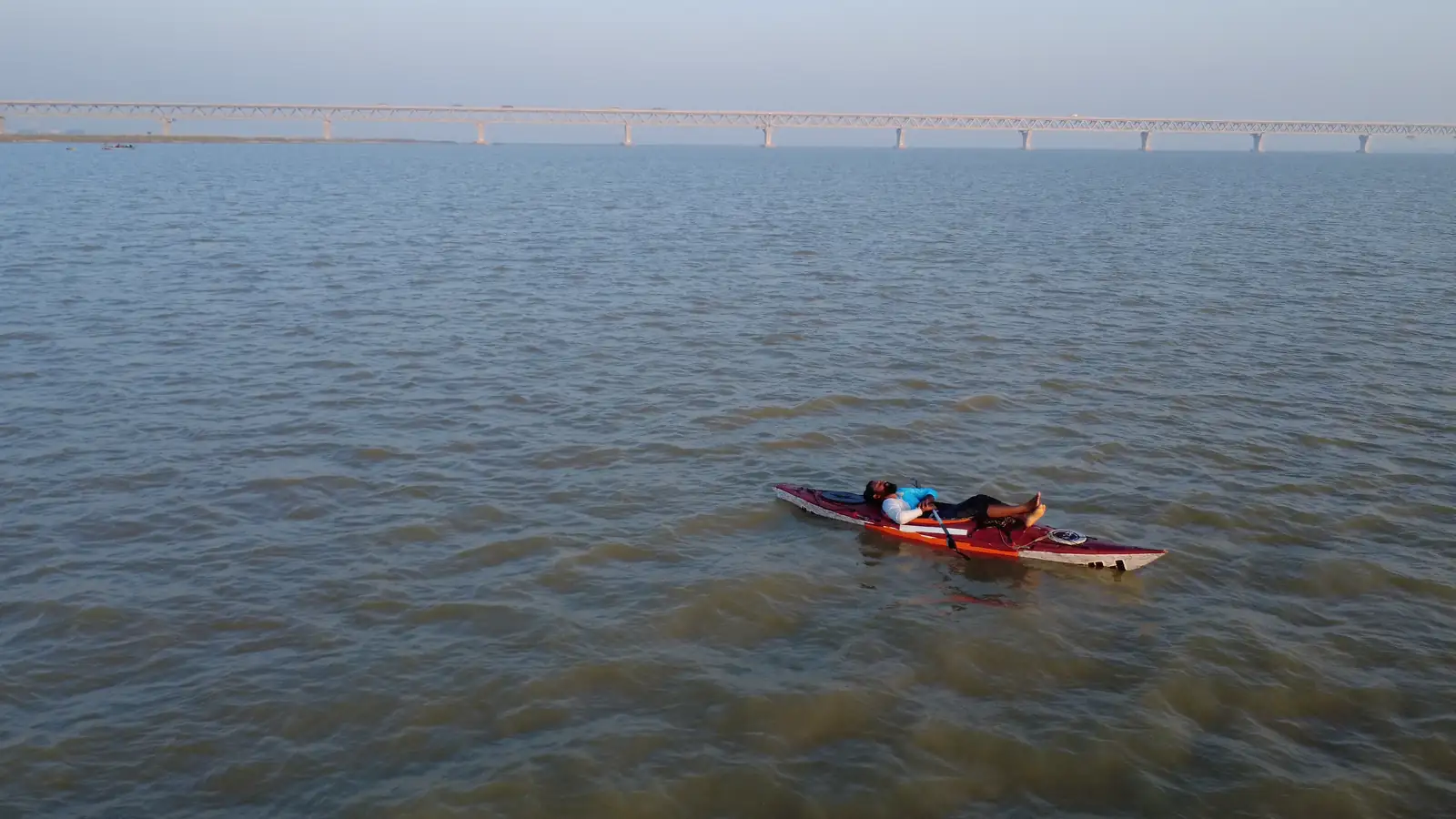
I had expected the wider southern rivers and scattered settlements to make overnight stops difficult. Instead, people kept offering shelter: in Haimchar, Mehendiganj and Alexander, in homes, premises and a construction site. At Nasirganj, people from Sariakandi already knew I had spent a night there earlier in the expedition. The country felt immense from a kayak, and surprisingly connected.
By 13 November, I had travelled approximately 650 kilometres through around 18 districts and reached Taltoli Bazar Ghat in the Lakshmipur–Noakhali stretch. Thirty days would clearly not be enough.
Four hours of paddling, kilometres backwards
Near Noakhali’s Chairman Ghat, I met Ismail Touhid Bhai, who had already contacted me online. His help became part of the next stage. From Katakhali, I set out towards Urir Char around nine in the morning.
The currents around the char were confusing. After hours of paddling and changing my intended destination, I checked my position around one: I had been pushed two or three kilometres backwards. Reaching a fishing boat got me out of immediate trouble. After two, I restarted from Katakhali along a route suggested by the fishermen and reached Swarna Dwip by evening.
I later abandoned the planned Sandwip leg and crossed towards Mirsarai. The inland expedition was becoming a coastal one. Local knowledge had changed the route, and accepting help had made it possible to continue.
Fishing boats, cargo ships, and a place for the night
Along the Chattogram coast, shelter sometimes came afloat. After Bhatiari, I entered a narrow canal and met Alauddin and a fishing crew waiting for enough water to leave. Their boat had been robbed only days before, yet they welcomed me. Someone walked through knee-deep mud to fetch mosquito coils. Dinner came with six pieces of fish.
Chattogram Port was another world: crowded lighter vessels, enormous mother ships and a small kayak moving among them. A conversation beside Al Jaber 3 became an invitation to stay onboard. After crossing the Karnaphuli mouth, I spent two days at Shaibal Gahira’s home in Madhya Gahira, surrounded by the boats, nets, markets and tides of a fishing community.
Farther south, near Kutubdia, Selim Bhai and Ashik Bhai invited me onto a coal carrier. When I learned it was heading to a mother vessel, curiosity briefly overtook expedition discipline. I went along to see it.
A different camp each night
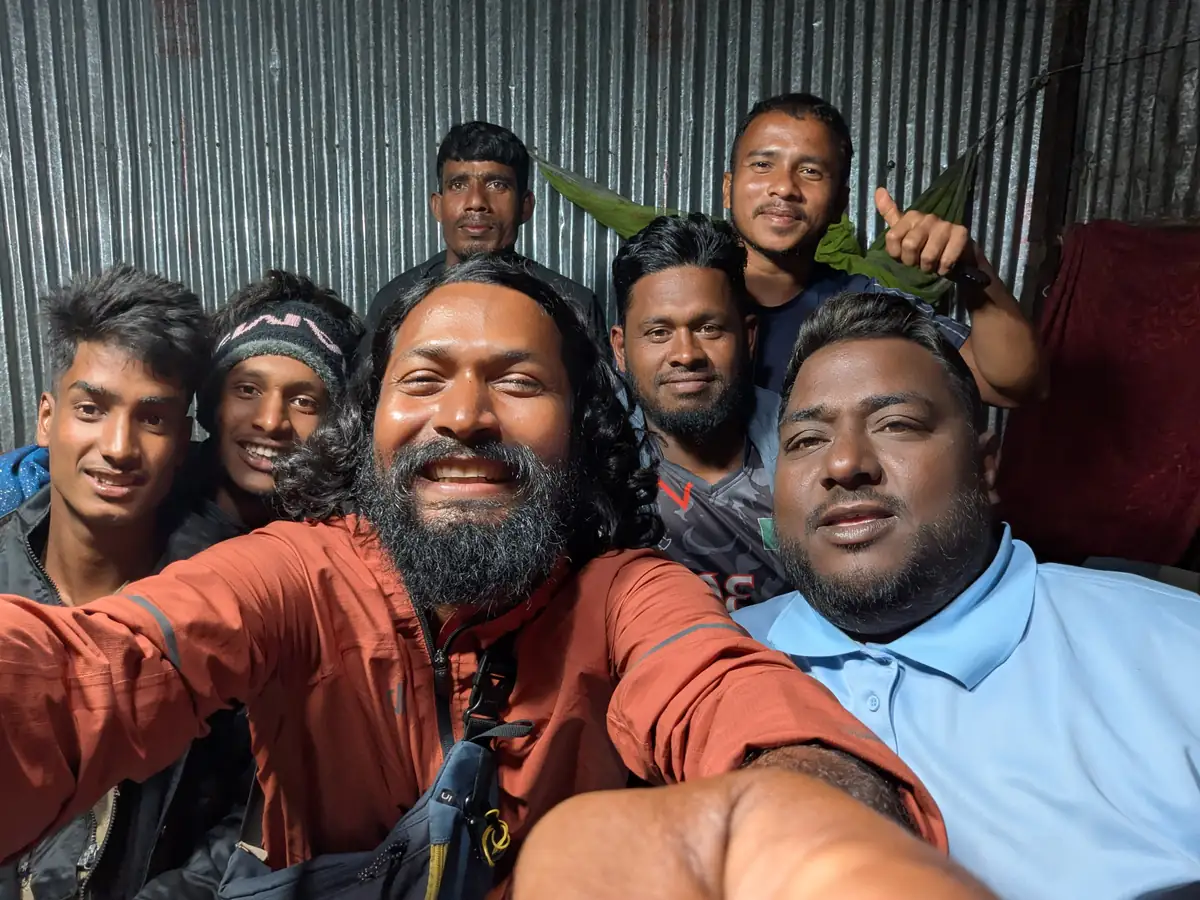
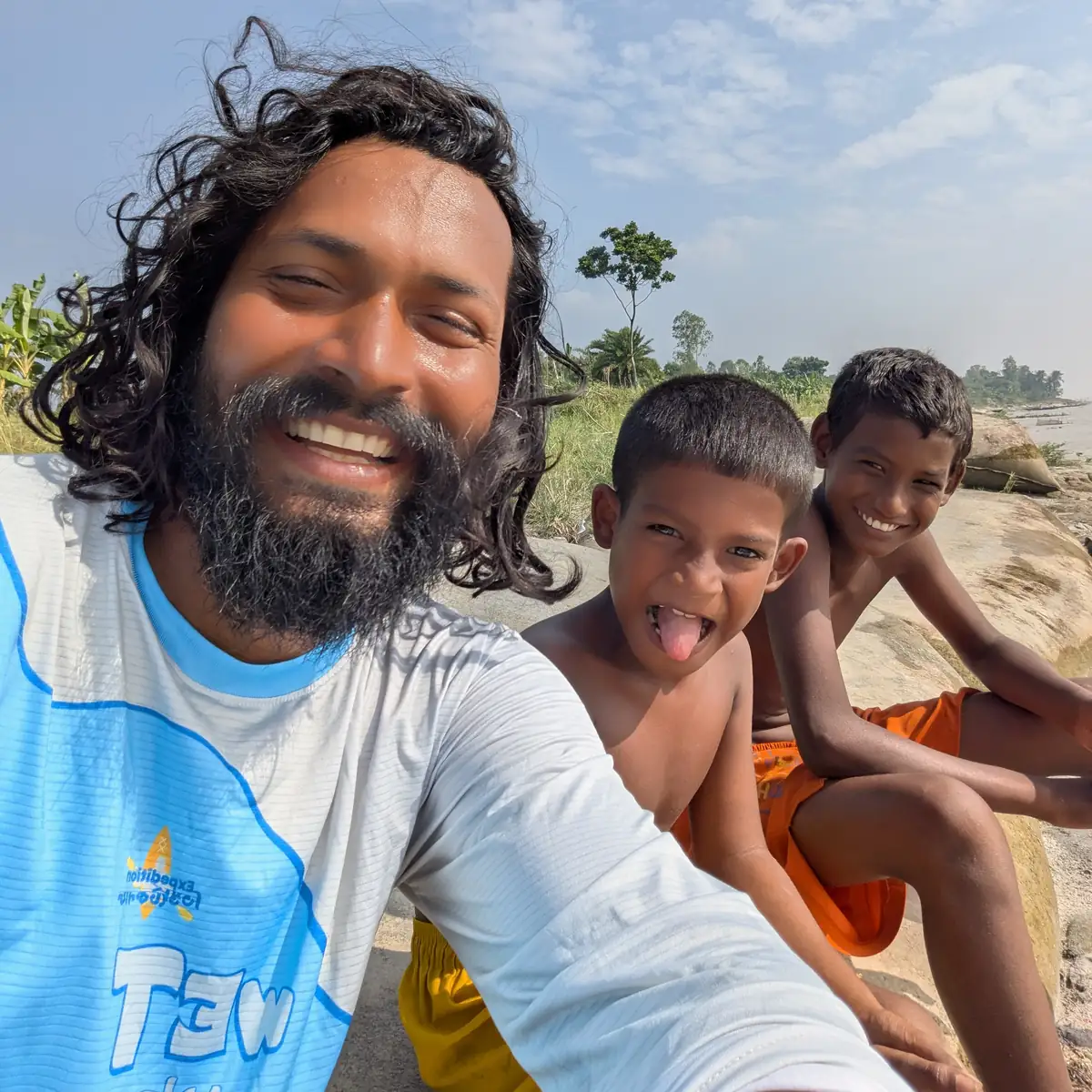
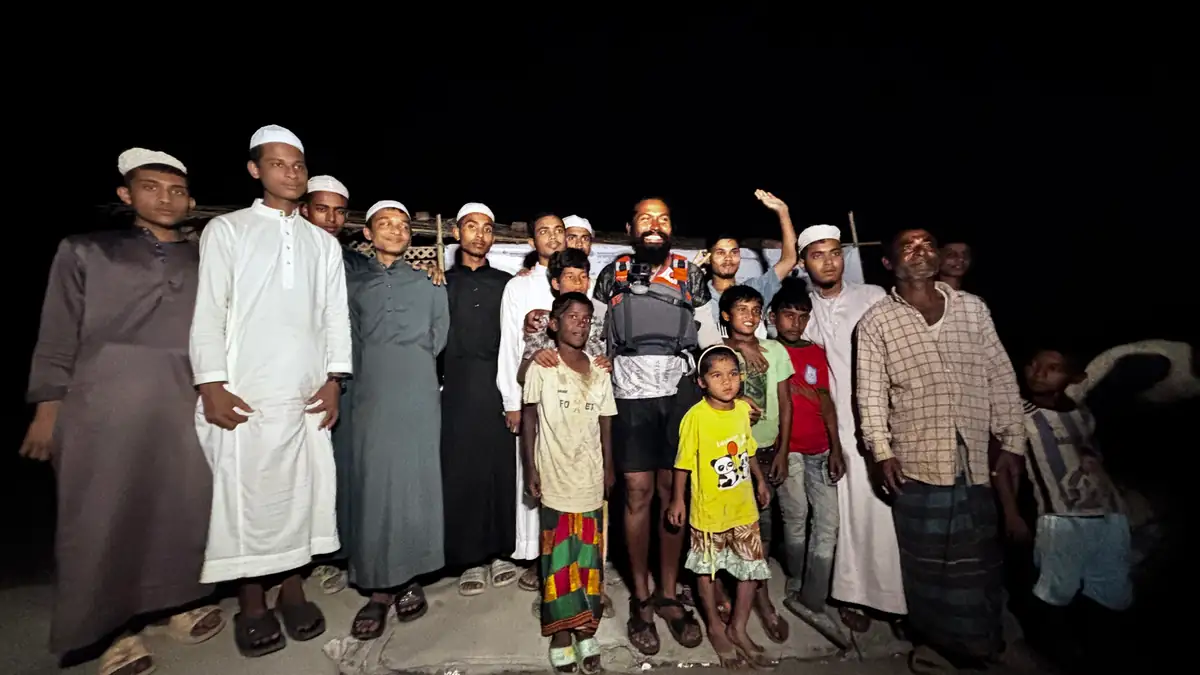
Across the expedition, a place to sleep could mean a vessel’s deck, a raised platform, a fishing boat, a room or an open sandbar. These photographs bring together some of those very different camps.
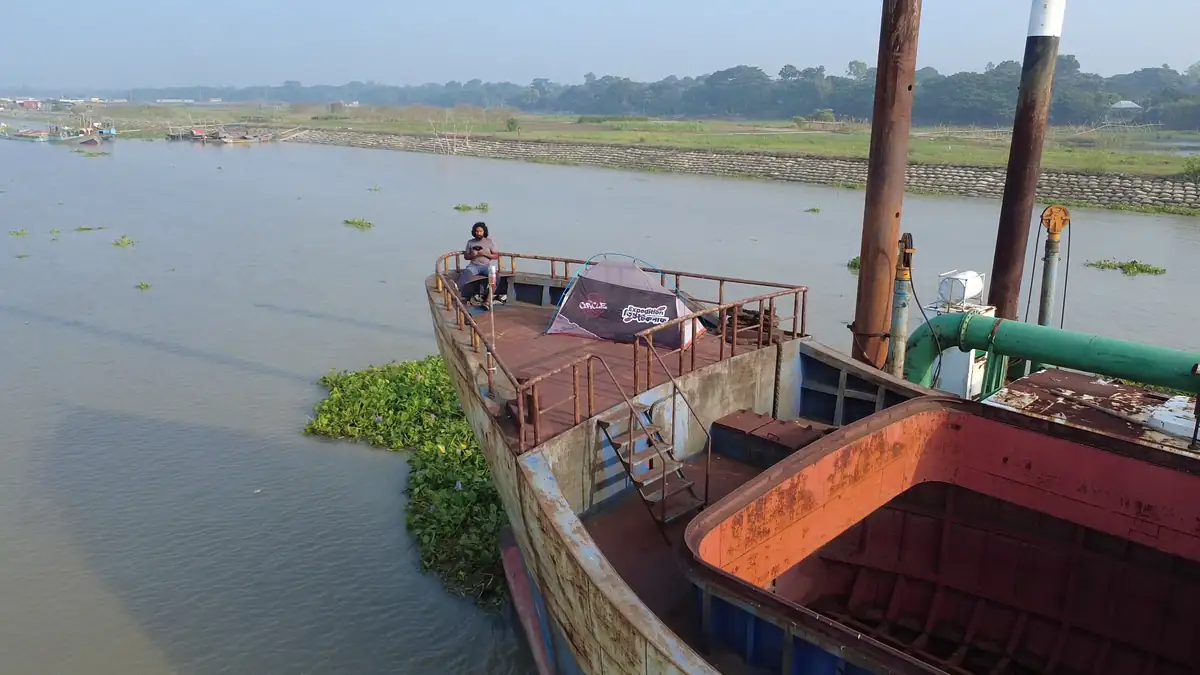
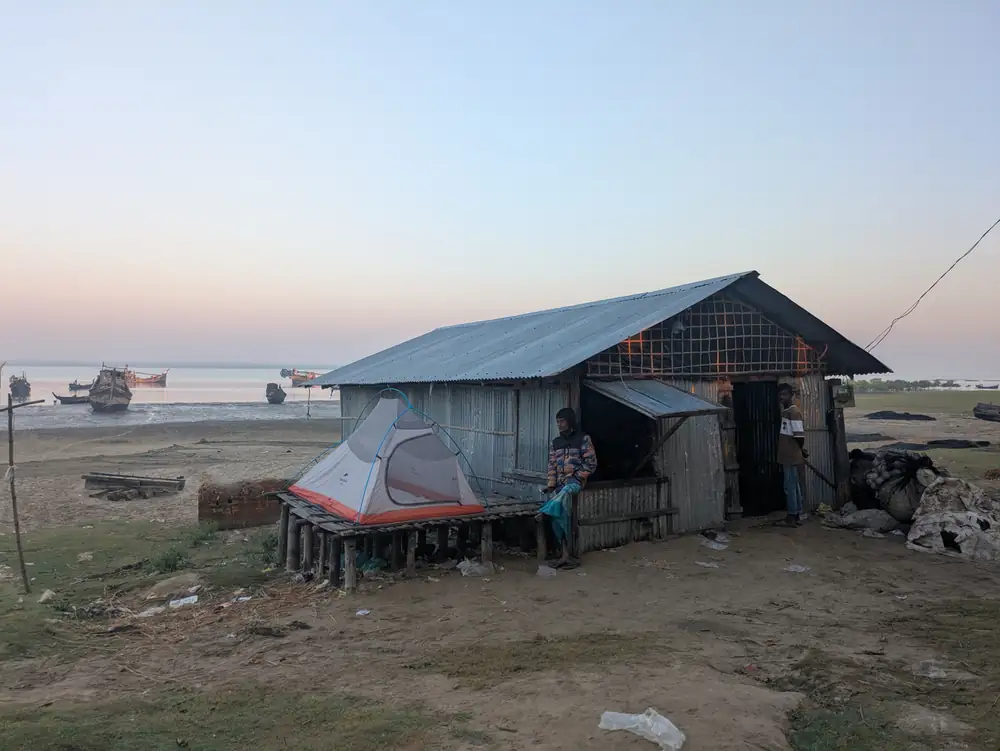
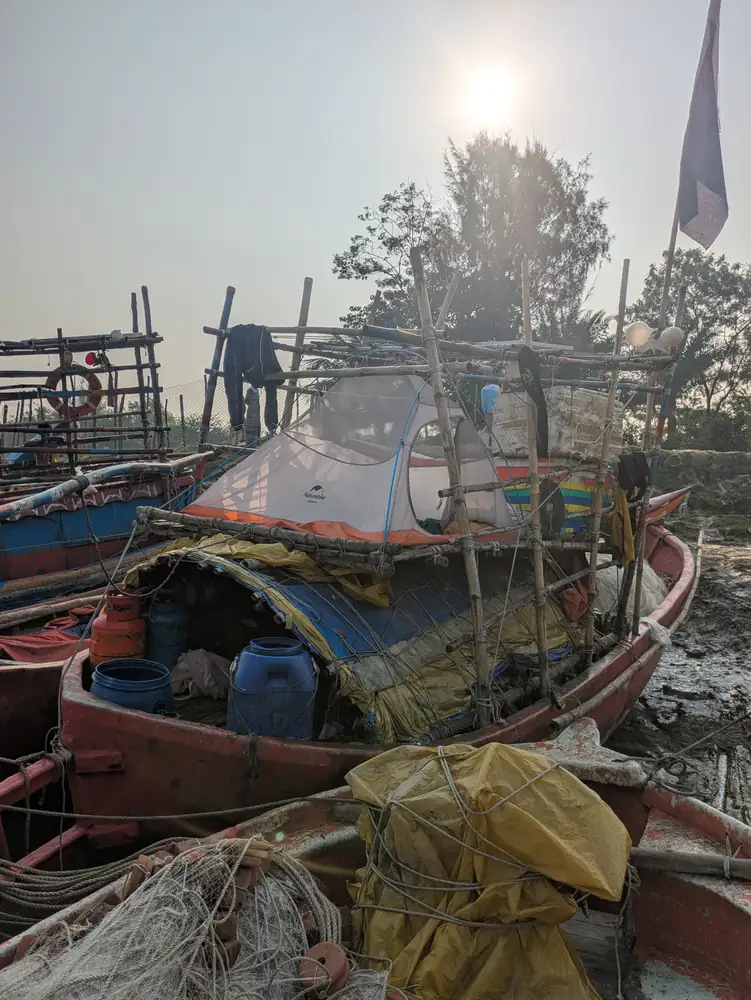
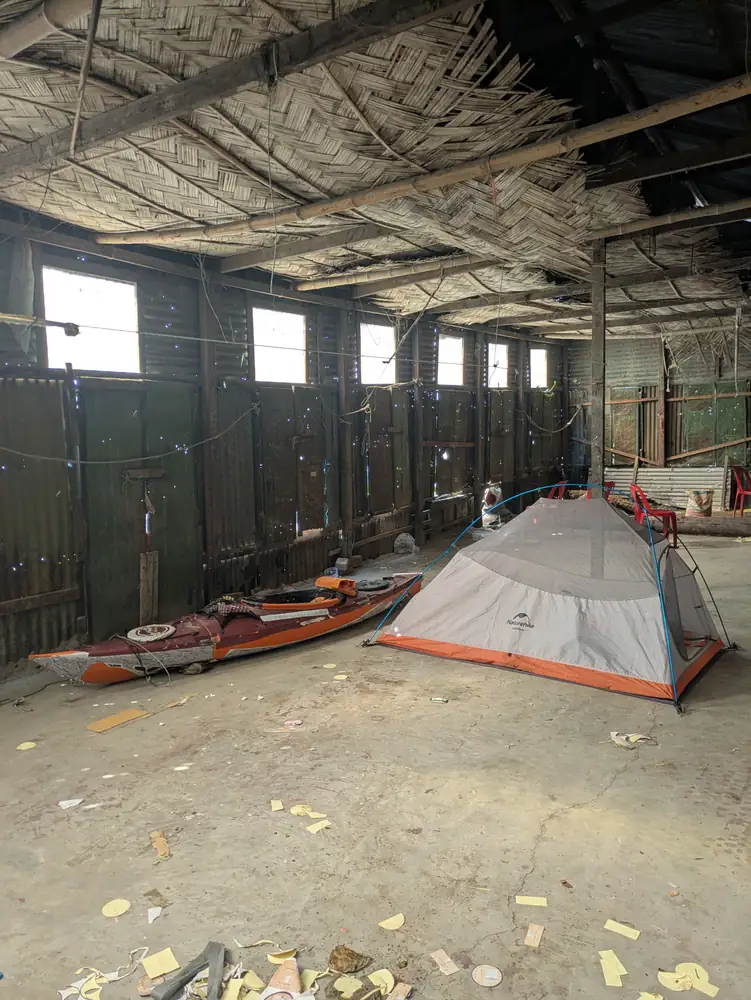
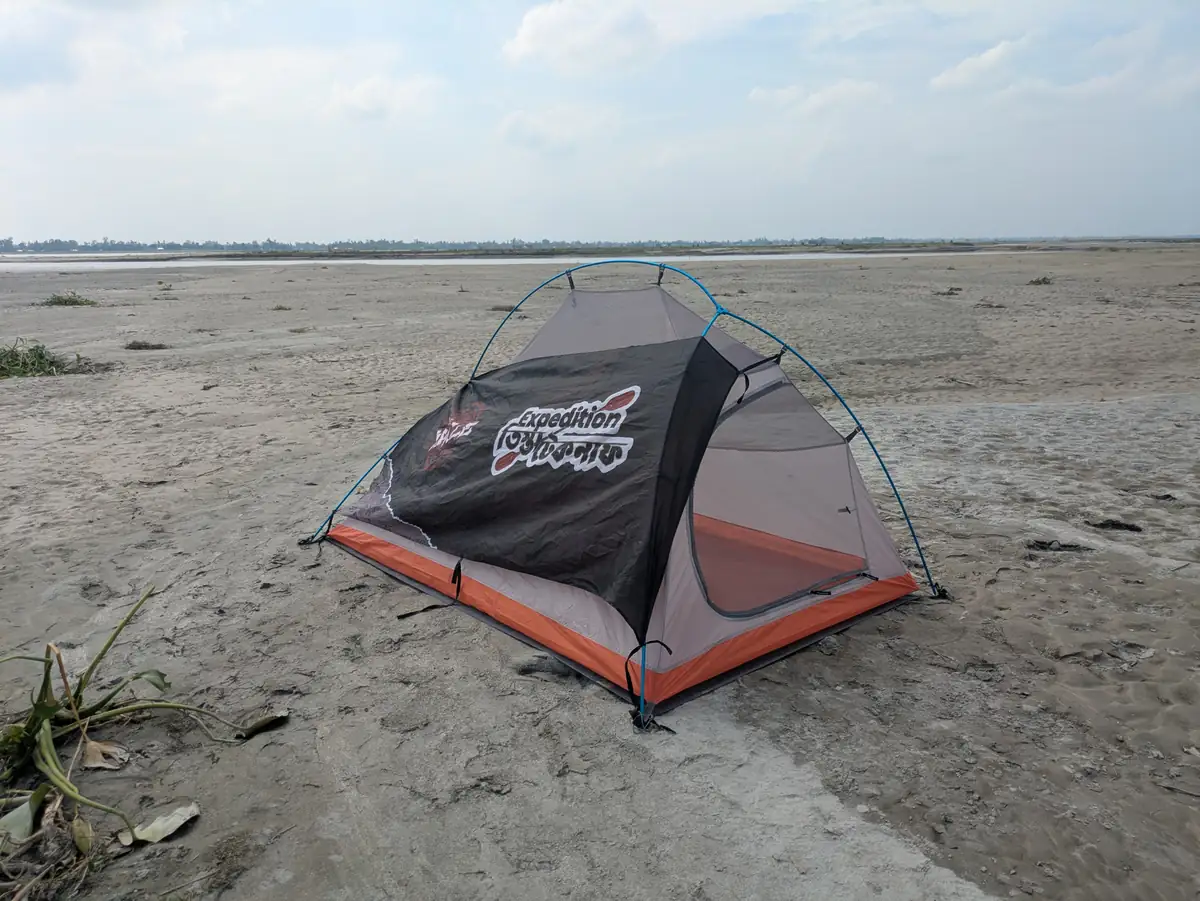
The shelter and shared meals mattered just as much as the distance covered. These are two more memories of the hospitality I received along the way.
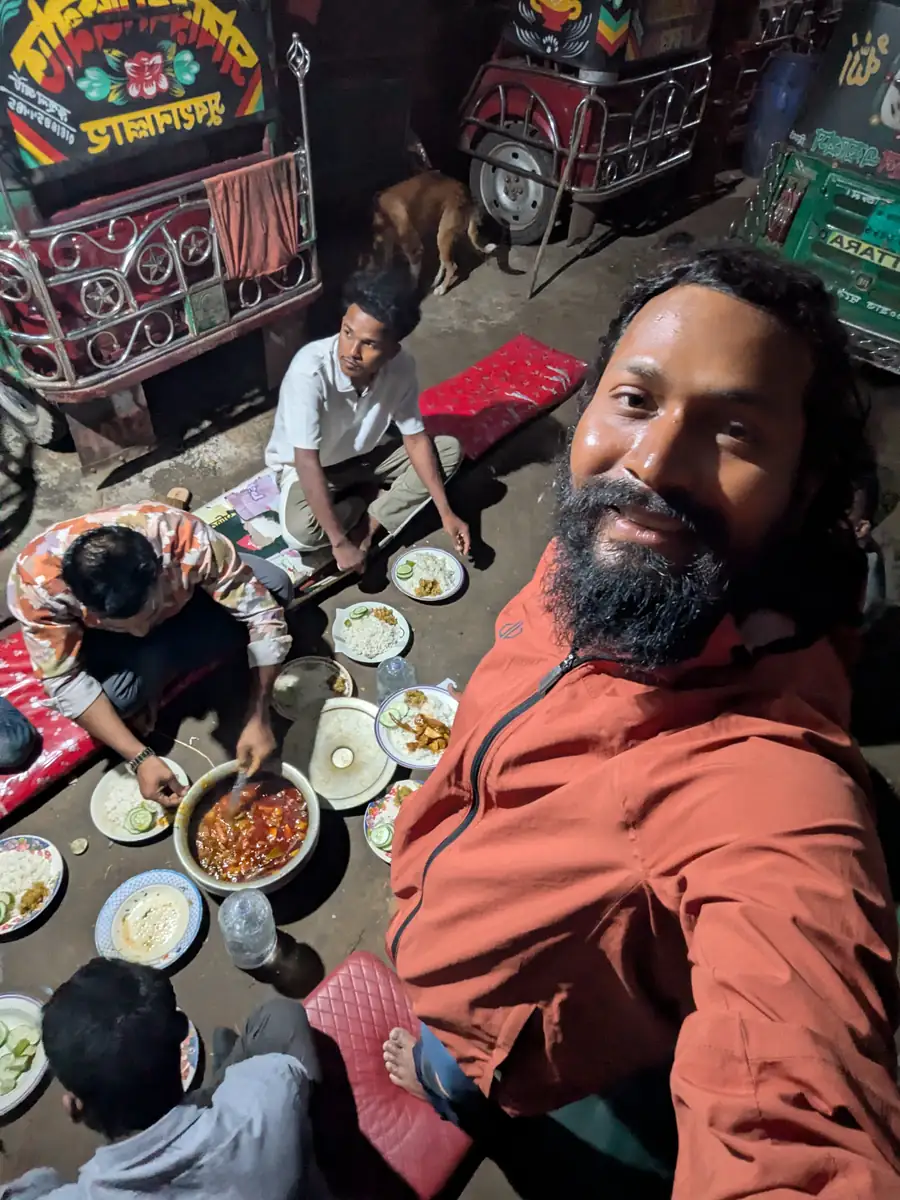
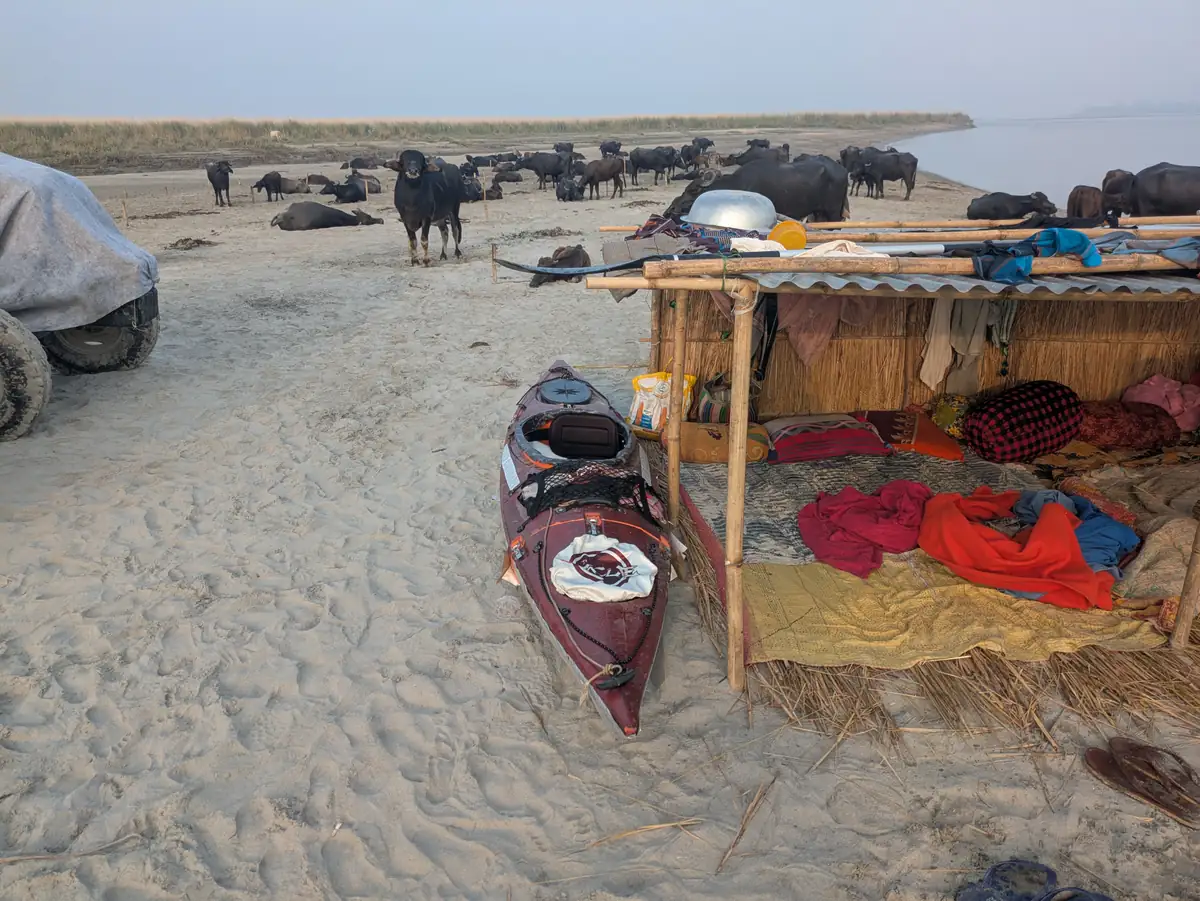
The beach was the difficult part
After the Sangu mouth, Mognama, Ujantia and the Maheshkhali channels, I reached Cox’s Bazar. Jisan accompanied this stage for two days, travelling by land while I moved by water.
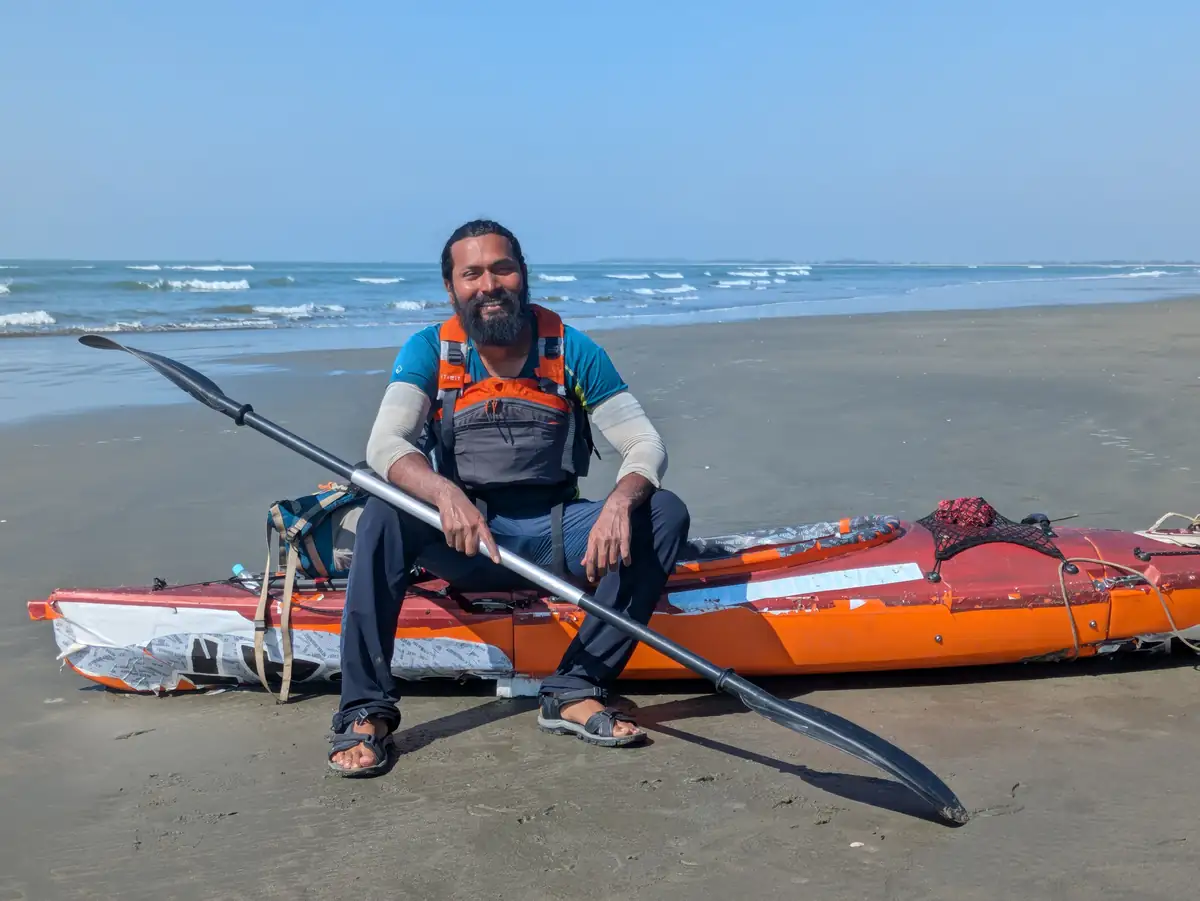
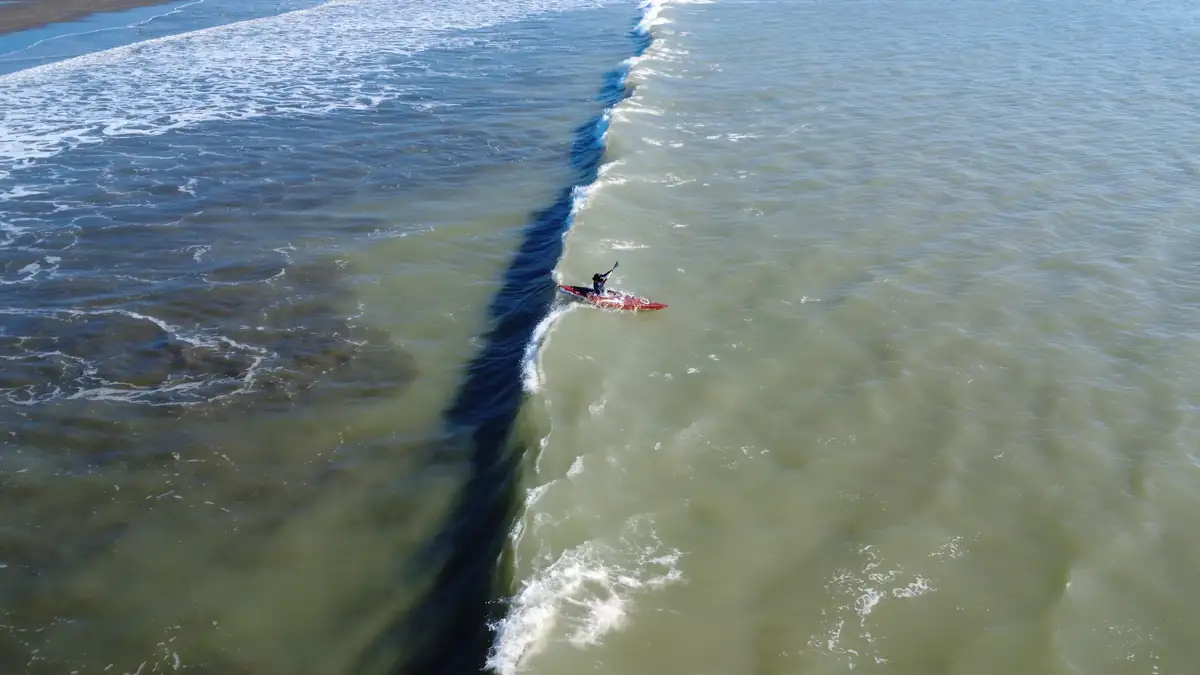
Now the challenge was surf. Launching and landing meant passing through waves breaking close to the beach. The kayak could fill with water in those final moments, even when the larger offshore waves felt manageable. I usually made one launch a day, used a favourable tide, and continued south before stopping.
Beyond Inani, rocks and coral complicated the landings. Naim and Himu travelled ahead to inspect the beaches and identify suitable places to come ashore. With their help, I completed the Cox’s Bazar–Teknaf stretch in four days.
The last landing
The final morning began at Noakhali Para in Teknaf, after a night with Rafiq Bhai’s family. Mahbub Bhai and Nur Nabi Bhai helped with dinner; a picnic organised by local autorickshaw drivers simply expanded to include us.
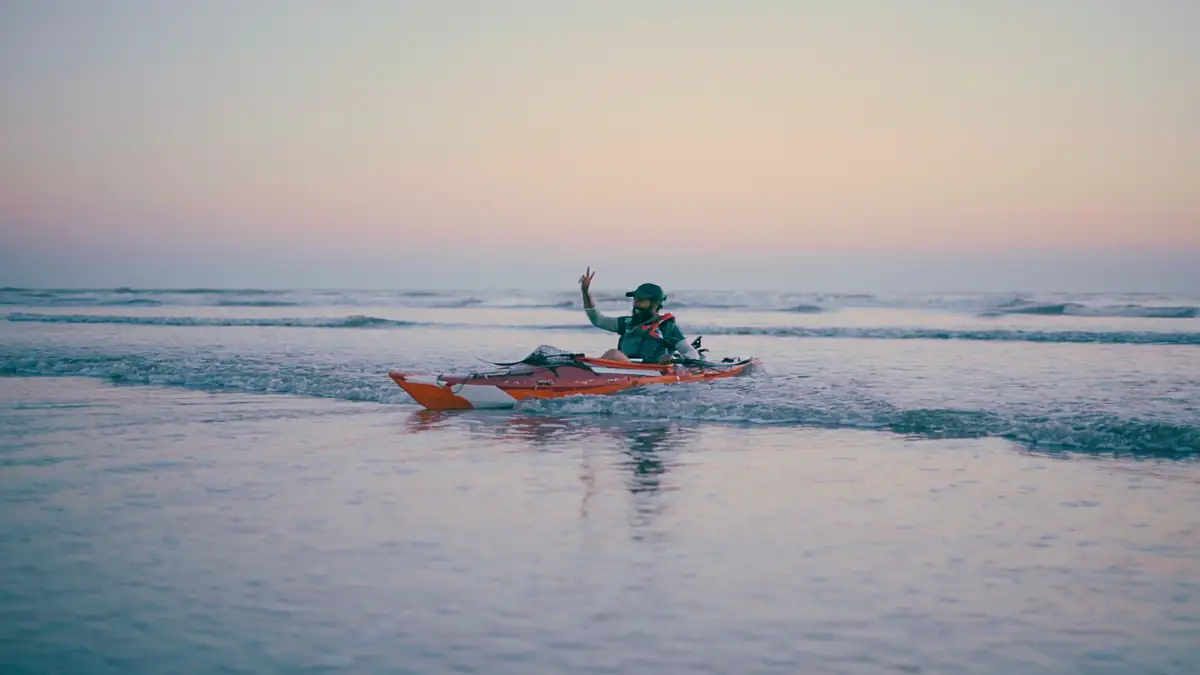
It was 4 December, day 48. By afternoon, Shah Porir Dwip was ahead. As the coastline curved, the breakers changed their angle and began breaking farther out. I stayed outside the surf zone, watched the rhythm and waited for an opening.
Friends and well-wishers stood on the embankment. After seven weeks of paddling, an untidy finish in front of everyone was an extra concern I could have done without. Then a gap opened. I turned towards shore and paddled hard. Around five in the afternoon, the kayak reached the beach, and people came running down to meet me.
Why I want us to return to our rivers
I saw a nearly dry Teesta, powerful confluences, shifting chars, fishing settlements and waterways darkened by urban waste. Erosion was not an abstract statistic when a bank was collapsing nearby. Pollution was not a distant photograph when that water touched my hands.
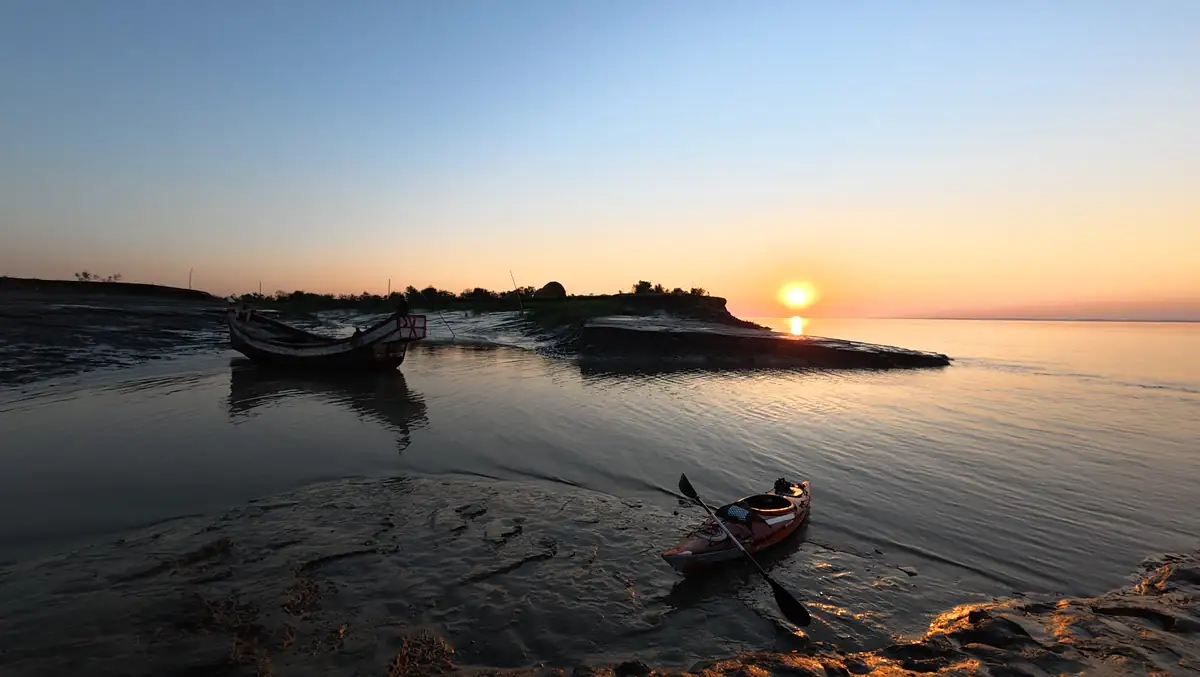
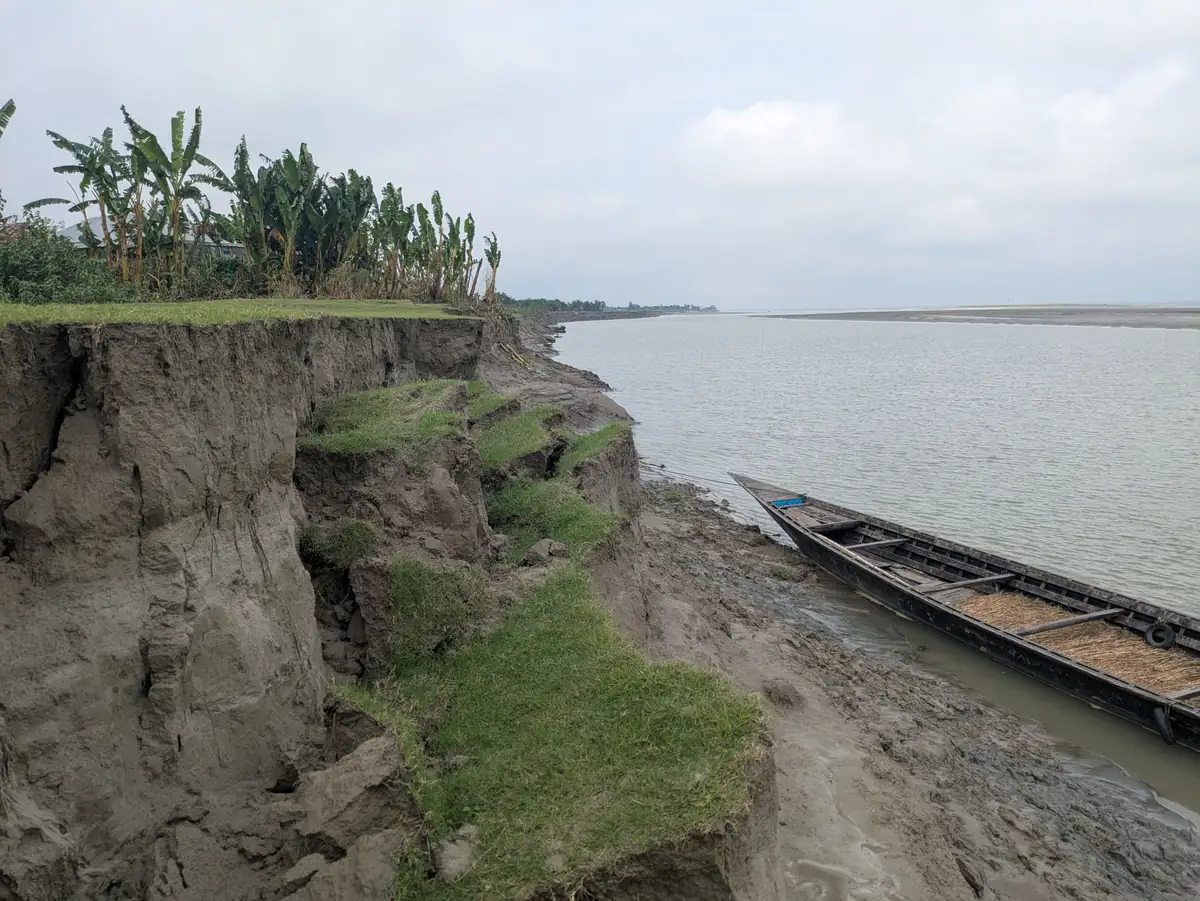
Photographs, videos and updates became a moving diary of river livelihoods, biodiversity and changing landscapes. Ekattor Television and Chhutir Din, Prothom Alo’s Saturday supplement, joined as media partners and helped those stories reach farther than the kayak.
The expedition was an athletic undertaking, but its lasting meaning lies in those encounters. Bangladesh’s waterways offer ways to discover the country through kayaking, rowing, sailing and responsible river travel. They also demand attention to weather, tides, navigation, landing places and the limits of our judgement.
I hope journeys like this make more people curious about the rivers close to home. Connection can give conservation a personal meaning. Before we lose more waterways to neglect, we need to return to them: travel, learn, listen and speak for them.
Thank you, The Circle
My heartfelt thanks to The Circle, the title sponsor of Expedition Teesta–Teknaf, for being part of this journey and helping make it happen. Their team was there for me throughout the expedition, with generous support and a willingness to help. I’m grateful for everything they brought to these 48 days—and for sharing the journey through their video series.
Teesta River to Shah Porir Dwip, Teknaf, Bangladesh
News Coverage
Reports, interviews and features about this expedition. Open a clipping to read or watch the original coverage.
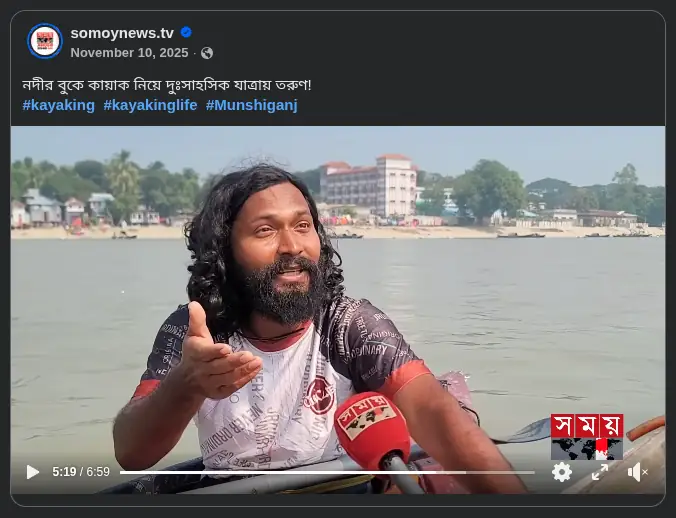
Stories from the river
Read / watch coverage ↗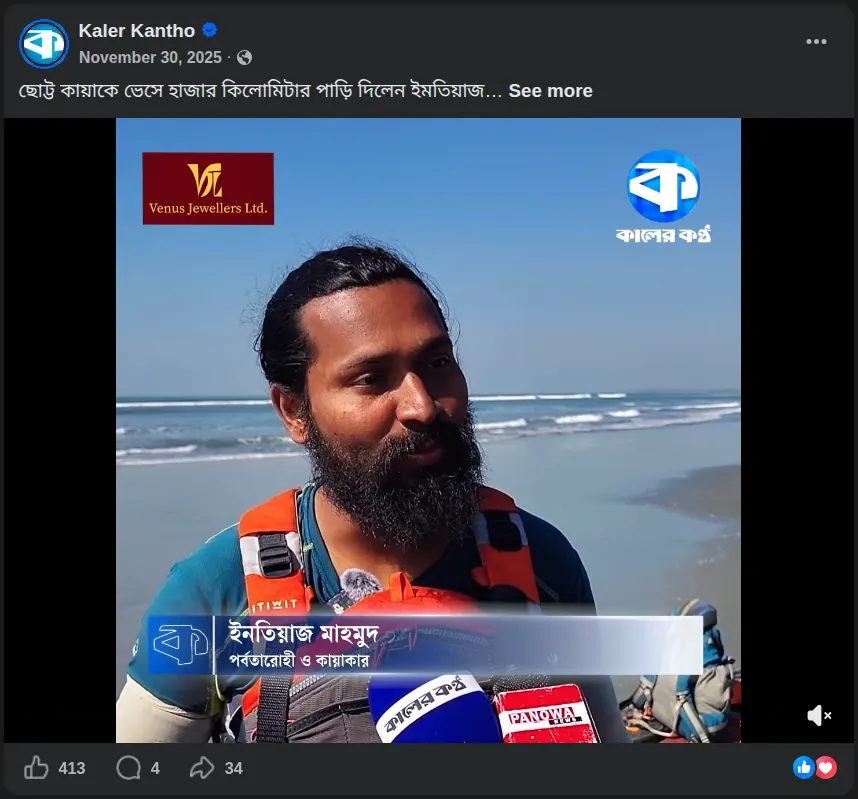
A thousand kilometres in a small kayak
Read / watch coverage ↗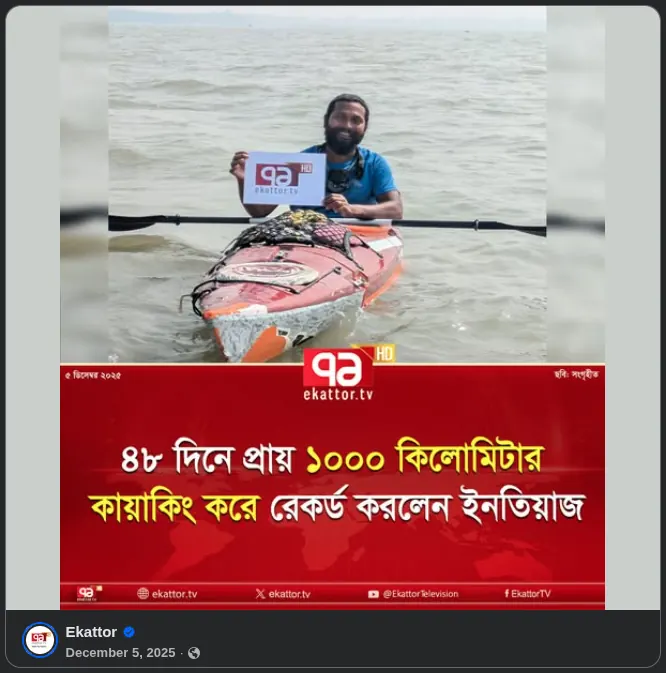
Nearly 1,000 kilometres by kayak in 48 days
Read / watch coverage ↗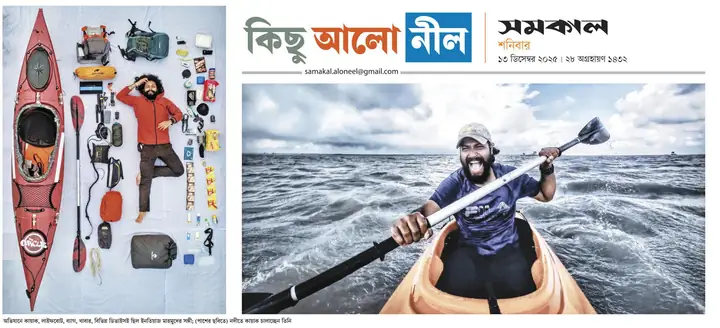
Life on the water
Read / watch coverage ↗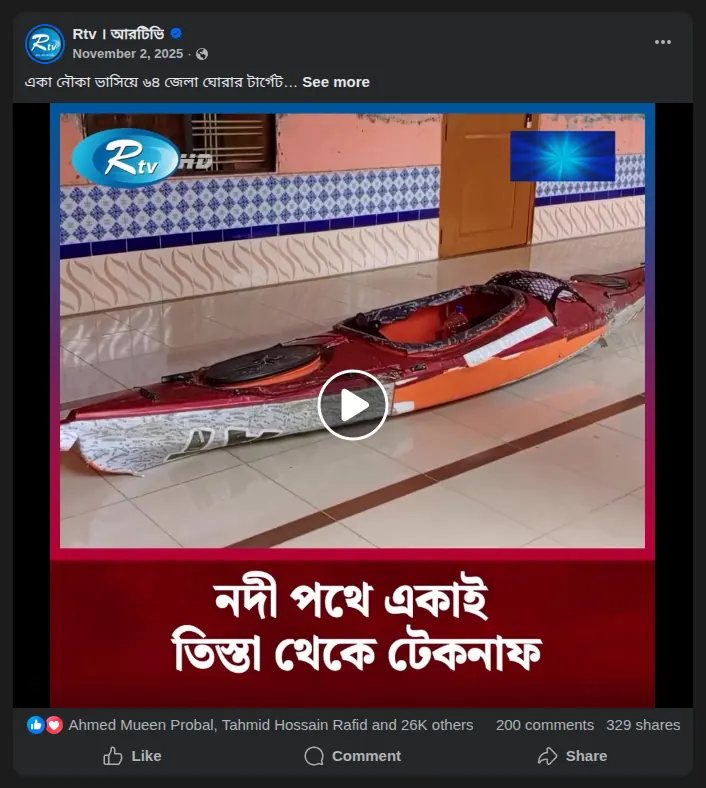
Solo by river: Teesta to Teknaf
Read / watch coverage ↗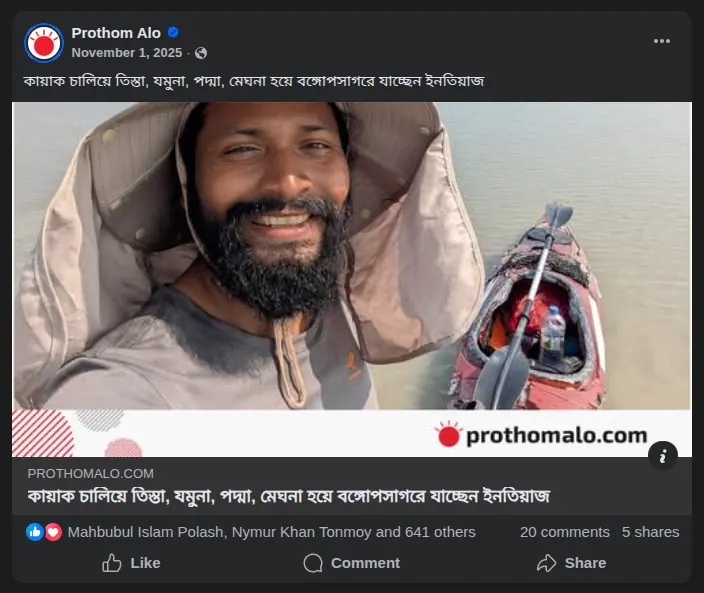
Paddling through Bangladesh to the Bay of Bengal
Read / watch coverage ↗Read More
Expeditions
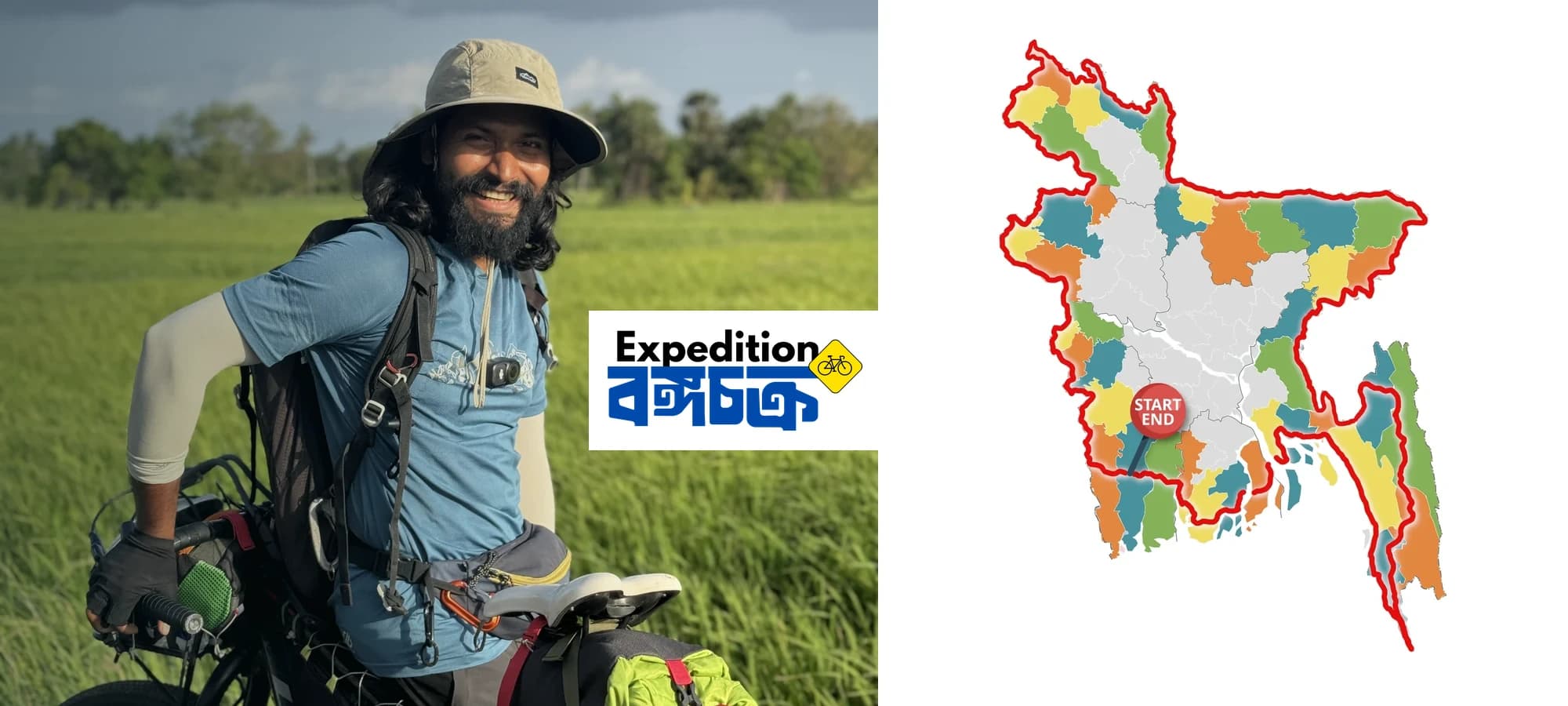
BongoChakra: A 5,000+ km Cycling Expedition Following the Entire Borderline of Bangladesh
A partnership proposal for a planned 90-day bicycle journey along the outer edges of Bangladesh, connecting around 40 districts through stories, community rides and field content.
Expeditions
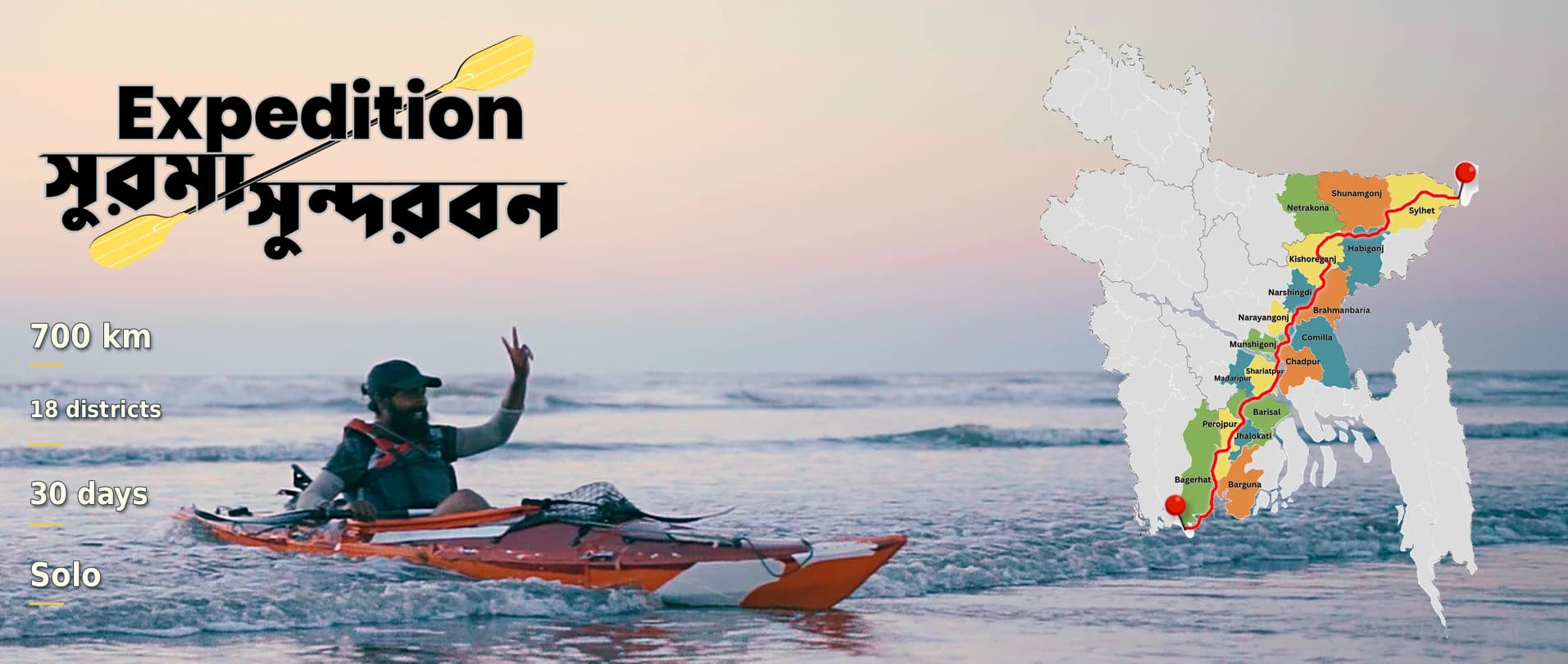
Expedition Shurma-Sundarban: A Planned Kayak Expedition in Bangladesh
A planned 700 km solo kayak expedition in Bangladesh, from Sunamganj to the Sundarbans. Partner with Intiaz Mahmud to tell stories of rivers and rural communities.
Expeditions
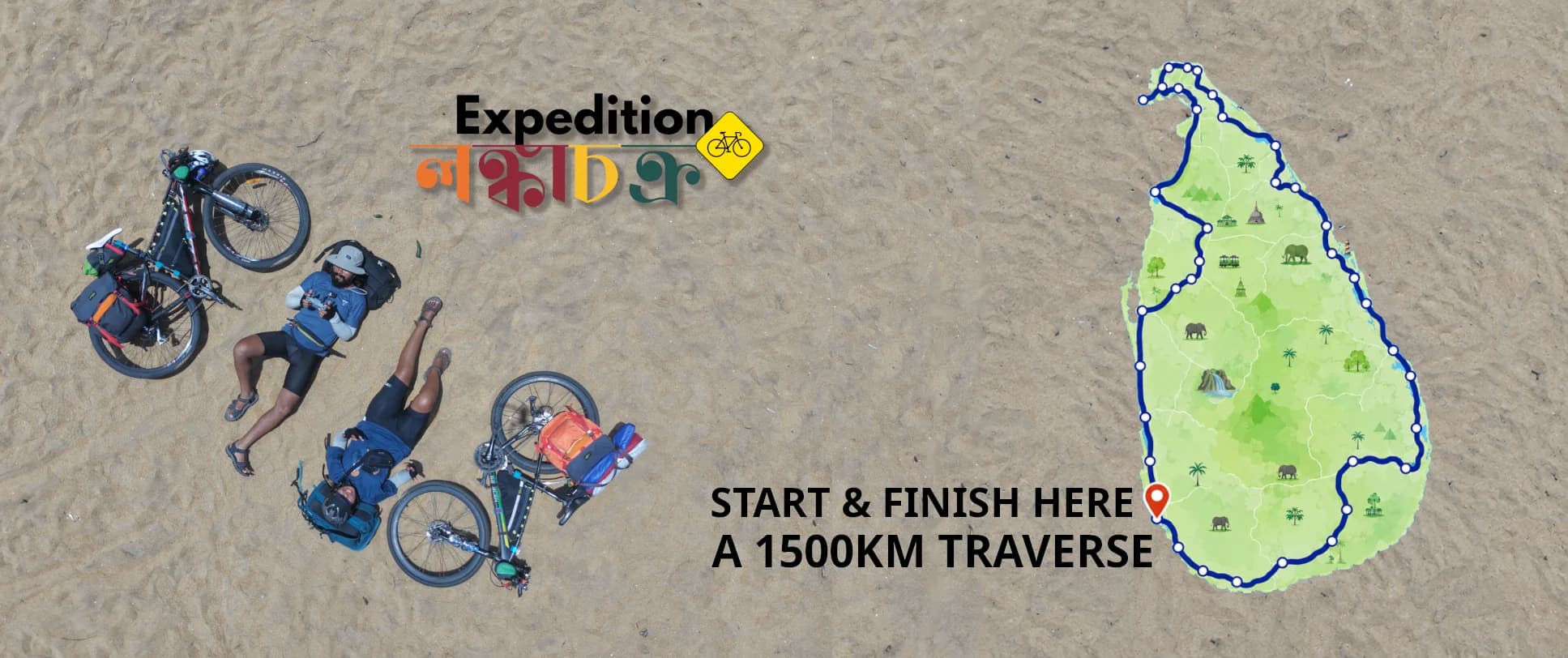
LankaChakra: Cycling 1,500 Kilometres Around Sri Lanka
A bicycle tour around Sri Lanka with Subah: 21 riding days shaped by heat, headwinds, remote work, wildlife and the kindness of strangers.
Expeditions
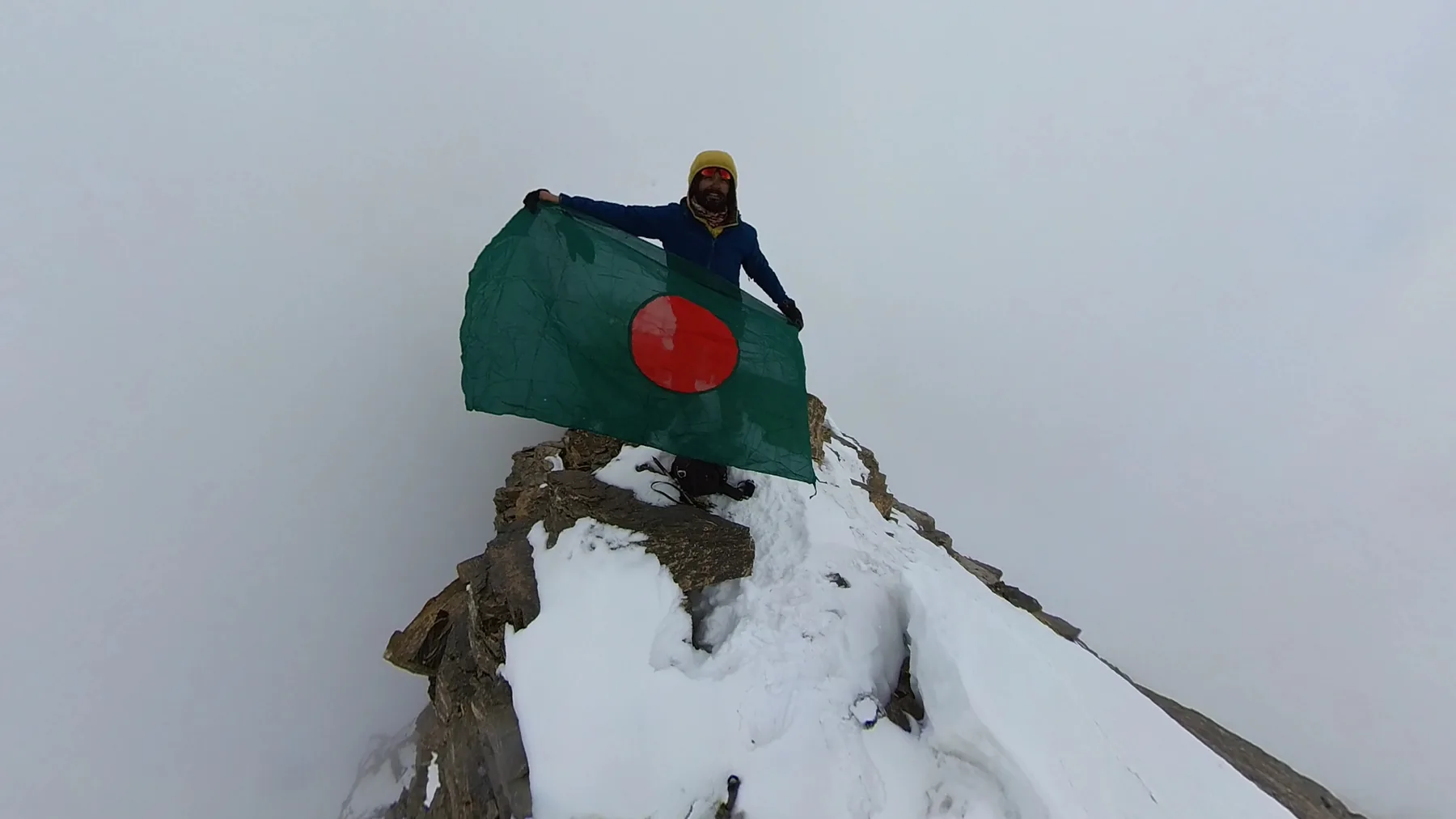
Pisang Peak Solo: Bangladesh's First Solo Winter Climb Above 6,000 Metres
A winter, self-supported ascent of Nepal’s 6,091-metre Pisang Peak—the first solo summit of a six-thousander by a Bangladeshi mountaineer.